
Stop Chasing AUM, Start Building Trust
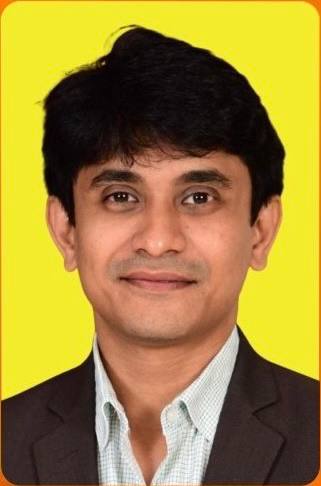
Sadique Neelgund
Founder & CEO, NetworkFPArticle
ARTHMITRA GURUKULAM | AMG LEKH
Stop Chasing AUM. Start Building Trust.
In the personal
finance industry, success is often measured by a single number: Assets Under
Management (AUM).
It is the most
visible metric, widely tracked and frequently used as a proxy for credibility.
But it is also one of the most misleading.
Because the most
durable and scalable financial advisory practices are not built by chasing AUM.
They are built by designing trust that compounds over time.
The limits of an AUM-first
approach
When AUM becomes the
primary goal, behavior tends to follow a predictable pattern - more client
acquisition, more product discussions, and more short-term activity.
This creates a model
that depends heavily on constant effort. Growth slows the moment activity
slows. In such cases, the professional is not building an asset book; they are
running a high-effort, income-driven practice.
The problem is not
with ambition. It is with what is being optimized.
Focusing only on AUM
often leads to shallow relationships and transactional engagement - both of
which are difficult to sustain over long periods.
A more meaningful lens: Families
Under Management
A more durable way
to view the profession is through Families Under Management (FUM).
While AUM measures
money, FUM measures responsibility.
This shift
fundamentally changes how professionals engage with clients. A client is no
longer a portfolio or a folio. A client is a family with goals, risks,
behaviors, and transitions that unfold over decades.
When professionals
adopt this lens:
- Advice
moves beyond products to life decisions
- Engagement
becomes long-term rather than transactional
- Relationships
deepen significantly
As a result, clients
stay longer, refer more, and rely on the professional beyond investment
decisions.
Trust begins to
compound.
The real role of a financial
professional
At its core, the
role of a personal finance professional is not to outperform markets.
It is to help
clients navigate uncertainty with clarity and confidence.
Markets will
fluctuate. Products will evolve. Regulations will change. But investor
behavior during uncertainty remains the single biggest determinant of
long-term outcomes.
Professionals who
succeed over decades are those who:
- Help
clients stay disciplined during volatility
- Provide
clarity in moments of confusion
- Maintain
consistency across market cycles
In effect, they are
not managing money alone they are managing behavior.
From activity to systems
Another defining
shift is from activity to systems.
Many professionals
operate in a cycle of continuous activity meetings, follow-ups, and reactive
servicing. While necessary, activity alone does not create scale.
Sustainable growth
comes from building systems that:
- Deliver a
consistent client experience
- Standardize
communication and reviews
- Reduce
dependence on individual effort
When trust is
delivered through systems rather than sporadic effort, growth becomes more
predictable and less exhausting.
The compounding equation
A durable asset book
is built at the intersection of three factors:
- Relationships
- Process
- Time
Relationships create
trust. Process ensures consistency. Time enables compounding.
Individually, each
has limited impact. Together, they create a powerful flywheel.
This is the same
principle that drives successful investing applied to practice building.
Why growth should be an outcome,
not a target
AUM targets - ₹100
crore, ₹500 crore, or more are common. While they provide direction, they
rarely improve the underlying quality of a practice.
A more reliable
approach is to track indicators of trust:
- Client
retention over long periods
- Referrals
from existing clients
- Reduced
dependence on constant prospecting
- Greater
stability across market cycles
When these improve,
AUM growth follows naturally.
When they do not,
chasing higher targets often leads to higher stress without greater resilience.
From individual practice to
institution
As practices grow, a
critical transition becomes necessary from individual-driven work to
institution-building.
This involves
documenting processes, building teams, and creating continuity beyond a single
individual.
Without this shift,
growth remains limited by personal capacity. With it, the practice evolves into
a long-term institution capable of serving clients across generations.
The core message
The future of
personal finance will not be defined by those who gather the most assets.
It will be defined
by those who build the most trusted relationships at scale.
AUM is not the goal.
It is the by-product of a system built on trust, consistency, and long-term
client engagement.
The most powerful
asset book is not the largest one.
It is the one that
continues to grow. Because clients stay, refer, and rely on the professional
over time.
Stop chasing AUM. Start building
trust that compounds.
Published on AMG Lekh
| Arthmitra Gurukulam | For
AMG Partner Members
Discussion
0No discussion yet. Start the conversation.