
Amritkaal For Mutual Fund Distributors, Building a community of Happy Investors
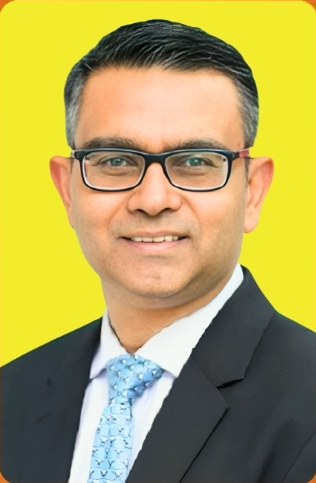
Gaurav Goel
Head-Sales & Marketing, Canara Robeco Asset Management CompanyArticle
Amrit Kaal for Mutual Fund Distributors:
Building a Community of Happy Investors
By Gaurav
Goyal, Head - Sales & Marketing, Canara Robeco Asset Management Company
(CRAMC)
India’s
transformative economic phase often referred to as Amrit Kaal—a period leading
up to 2047 that is expected to redefine the country’s financial landscape – is
aimed at making India a developed nation by its 100th Independence Day. For
mutual fund distributors (MFDs), this phase presents not just a growth
opportunity, but a structural shift in how wealth is created, managed and
experienced by the investors. The central theme emerging from this
transformation is clear- the future belongs to those who can build and sustain
happy investors.
The Scale
of Opportunity
India’s
expanding financial ecosystem highlights the magnitude of this opportunity.
With a population exceeding 140 crores, the country has seen exponential growth
in financial participation—ranging from Unified Payments Interface (UPI) users
and demat accounts to internet penetration and tax filers. Despite this, mutual
fund participation remains relatively underpenetrated, with only about 6 crore
unique investors out of over 27 crore mutual fund accounts. (Data as of
February 2026)
Looking
ahead to 2047, estimates indicate a dramatic expansion across economic
indicators. Gross Domestic Product (GDP) is expected to grow nearly 9 times,
while mutual fund assets under management (AUM) could increase more than 50
times. Retail investor participation is also projected to rise significantly,
indicating a broad-based shift toward financialization of savings. However,
this growth will not automatically translate into investor satisfaction or
wealth creation unless behavioural challenges are addressed. (Data as of
December 2025)
Wealth
Creation: More Behaviour than Knowledge
Studies
show that investment pattern is less about knowledge and more about behaviour.
Investor returns often lag behind market returns, not due to poor products, but
due to poor decisions.
This
phenomenon, known as the behaviour gap, arises from emotional reactions such as
fear, greed, herd mentality and short-term thinking. Data from long-term
studies reveals that while markets may deliver steady returns over decades, the
average investor significantly underperforms due to mistimed entry and exit
decisions.
This gap
is the root cause of “unhappy investors”—those who participate in markets but
fail to realize their full potential. For MFDs, this represents both a
challenge and a powerful opportunity to act as behavioural guides rather than
mere product distributors. Marketing Internal
The Role of MFDs: From Transactional to Transformational
In this
evolving landscape, the role of the MFD is shifting. The focus is no longer
just on facilitating transactions but on managing investor behaviour and
expectations. The ability to guide clients through market cycles, emotional
decisions and long-term planning becomes the defining factor of success.
Understanding
Investor Behaviour: The Emotional Balance Sheet
An
investor’s journey can be understood through an “emotional balance sheet.” On
the asset side lie qualities such as patience, conviction and rational
thinking. On the liability side are fear, herd mentality and short-term focus.
Creating
happy investors requires strengthening the asset side while minimizing
behavioural liabilities. This involves continuous engagement, education and
reinforcement of long-term principles. Emotional discipline, rather than market
timing, becomes the cornerstone of successful investing.
Wealth
Creation Trends for Happy Investors
Several
structural trends in the mutual fund industry provide insight into current
investor behaviour and areas of improvement:
1.
Allocation Trends Despite growing awareness, mutual funds account for only about 12% of
household financial savings. A significant portion remains parked in bank
deposits and traditional instruments. This indicates a need to increase
allocation toward market-linked investments while ensuring appropriate asset
allocation across equity, fixed income and hybrid categories. (Data as
of FY25)
To create
a community of happy investors, allocation from savings to mutual fund
investments may be increased.
2. Equity
Concentration 91% of
individual investor assets are concentrated in equity-oriented schemes, with
limited exposure to fixed income and hybrid funds. This imbalance can increase
volatility in investor experience, especially during market downturns.
Encouraging diversified portfolios can improve risk-adjusted outcomes. (Data as
of November 2025)
To create
a community of happy investors, allocation to fixed income and hybrid funds may
be increased.
3. New
Investor Trends Nearly
97% of new folios are in equity funds, reflecting a strong preference for
high-growth assets. However, this trend also raises concerns about risk
awareness and portfolio balance among new investors. (Data as of January 2026) Marketing
Internal
To create a community of happy investors, MFDs can act as financial guides.
4.
Concentration Risk Investor portfolios show high concentration of 46% in specific
categories such as sectoral, small-cap, and mid-cap funds. This increases the
concentration quotient (CQ), often at the cost of diversification. Improving
the diversification quotient (DQ) is essential for long-term stability. (Data
as of January 2026)
To create
a community of happy investors, MFDs can focus on diversification.
5.
Retention Challenges 44% of the industry’s equity assets get redeemed within two years. This
short holding period undermines the benefits of compounding and long-term
wealth creation. It also reflects a mismatch between investor expectations and
market realities. (Data as of September 2025)
To create
a community of happy investors, MFDs can encourage long term investments.
6. SIP
Discontinuation While
systematic investment plans (SIPs) continue to grow, discontinuation rates are
also high. In some periods, nearly as many SIPs are discontinued as are newly
registered. This highlights the need for better goal alignment and investor
commitment.
To create
a community of happy investors, MFDs can encourage goal-based SIPs.
7. Women
Investors An
encouraging trend is the increasing participation and longer holding periods
among women investors. The AMFI-CRISIL Factbook 2024 report states that 21%
women investors held assets for more than 5 years as compared to just 9% five
years back. This segment represents a significant growth opportunity, with
inherently a balanced investment discipline.
To create
a community of happy investors, MFDs can expand their women investor base.
The Power
of Structured Investing: The 3S Approach
To
address behavioural challenges and improve outcomes, a structured approach to
investing becomes essential. The “Power of 3S” framework provides a
comprehensive solution:
•
SIP (Systematic Investment Plan): Encourages discipline, regular investing and helps
average out market volatility.
•
STP (Systematic Transfer Plan): Facilitates gradual deployment of funds from low-risk
to high-risk assets, reducing timing risk.
•
SWP (Systematic Withdrawal Plan): Enables regular cash flows, especially useful for
retirement planning.
These
tools align investments with life goals, provides clarity and reduce emotional
decision-making. Marketing Internal
Goal-Based Investing: The Foundation of Happiness
One of
the most effective ways to create happy investors is to shift the focus from
products to goals. Whether it is buying a home, funding education, planning a
wedding, or building a retirement corpus, goal-based investing provides clarity
and purpose.
When
investments are linked to specific outcomes, investors are more likely to stay
committed, avoid premature withdrawals and remain resilient during market
volatility. It also transforms the conversation from returns to goals.
Time in
the Market vs Timing the Market
A
critical insight for investors is the limited impact of perfect timing compared
to consistent participation. Data shows that missing just a few of the best
market days can significantly reduce long-term returns.
Even when
comparing extreme scenarios—investing only at market lows versus only at
highs—the difference in long-term returns is relatively small. What truly
matters is staying invested consistently across cycles.
This
reinforces the principle that time in the market is more important than timing
the market. For MFDs, communicating this effectively can significantly reduce
investing errors.
Expanding
the Role
The
future calls for a transformation of Mutual Fund Distributors (MFDs).
More
importantly, the focus can shift from Assets Under Management to Goals Under
Management. This reflects a deeper engagement with investor needs and long-term
objectives.
Conclusion
The
journey to creating happy investors is not about outperforming markets but
about managing behaviour, expectations and goals. As India moves through Amrit
Kaal, the opportunity for MFDs lies in embracing this expanded role.
By
focusing on discipline, diversification and goal alignment, MFDs can bridge the
behaviour gap and unlock the full potential of wealth creation. In doing so,
they not only grow their own practice but also contribute meaningfully to the
financial well-being of millions of investors.
Source:
AMFI Data as of September 2025, January 2026 and February 2026, RBI- Crisil
Intelligence Report FY25, AMFI-PWC Vision Report 2025 Marketing Internal
Disclaimer:
The opinions
expressed in this document are of personal nature and do not constitute the
views of Canara Robeco Asset Management Company Limited (“CRAMC”). It is hereby
expressly stated that, neither the AMC, nor its officers, the trustees, the
Fund, any of their affiliates, representatives assume any responsibility for
the accuracy of such information or the views thereof. Further, Canara Robeco
Mutual Fund, its Sponsors, its Trustees, CRAMC, its employees, officers,
directors, etc. assume no financial liability whatsoever to the user of this
document. The above views are for general information purposes only and should
not be construed as recommendation or solicitation to invest in the Mutual Fund
schemes.
Mutual
Fund investments are subject to market risks, read all scheme related documents
carefully.
Discussion
1